ADVERTISEMENT
ADVERTISEMENT
 (No Ratings Yet)
 Loading...
Fullscreen
ADVERTISEMENT


 (No Ratings Yet)Loading...
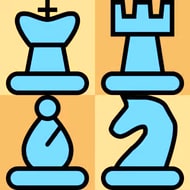
Chessformer reimagines chess not as a competitive battle, but as a solitary, contemplative journey through architectural puzzles. It transmutes the classic rules of piece movement into the core verbs of platformer navigation, creating a unique genre hybrid where logic dictates every jump and slide. Players inhabit a single chess piece per level, mastering its intrinsic movement dialect to traverse intricate environments and unlock spatial conundrums. The experience is a meditation on foresight, where each move is a committed step in a premeditated path.
The entire fabric of Chessformer is woven from the immutable laws of chess movement. Each level presents a specific piece—a knight’s erratic L-shape, a rook’s unbounded orthogonality, a bishop’s diagonal glide—as the sole tool for interaction. The puzzle lies in interpreting these abstract movement patterns within a physical, often treacherous, landscape. Navigating chasms, ascending platforms, and circumventing barriers all require a pure translation of chessboard logic into three-dimensional space.
Levels function as elegant, self-contained theorems waiting to be proven. Designed with escalating intricacy, they begin by establishing fundamental axioms of movement before layering in complexity through elevation, obstructive elements, and sequence-dependent pathways. Success demands the player mentally simulates the entire chain of moves before the first action, as the environment offers little forgiveness for positional missteps.
This is a game that prizes cerebral deliberation over reflex. The primary interface is the player’s mind, not their reflexes. It encourages a ritual of pause-analysis-calculate, where visualizing potential movement trees is paramount. Solutions are often singular or efficiency-driven, elevating precision and logical deduction above mere trial-and-error exploration.
Progression in Chessformer is a map of the player’s evolving cognition, not their avatar’s stats. Difficulty escalates not through faster enemies, but through more devious board geometries and constrained resources. Mastery is achieved by internalizing patterns, recognizing latent opportunities in the layout, and applying a refined chess logic to ever-more-alien spatial arrangements.
A common inquiry is the prerequisite of chess expertise. While beneficial, deep knowledge is not required; Chessformer is engineered as a tacit tutor. Progress is unlocked through mindful observation of the space, safe experimentation to map possibilities, and treating each failed attempt as a valuable constraint for the eventual solution.
Chessformer offers a distilled, thoughtful puzzle experience that elegantly deconstructs and recontextualizes chess mechanics. By fusing methodical level design with unyielding classic rules, it cultivates a unique space for logical thinking, meticulous planning, and the profound satisfaction of solving spatial problems with the timeless language of chess.
There are no reviews yet. Be the first one to write one.