ADVERTISEMENT
ADVERTISEMENT

 (No Ratings Yet)
 Loading...
Fullscreen
ADVERTISEMENT


 (No Ratings Yet)Loading...
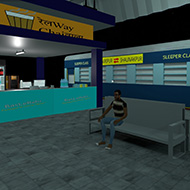
You wipe down the counter of DrainSim’s stall for the third time this shift, watching a line of customers shuffle forward under a sign that’s lost half its paint, and you already sense tonight isn’t going to be a quiet one. Somewhere behind the shelves a pipe ticks against the wall, the kind of sound you stop noticing until it stops. Orders come in faster than you can restock, and every wasted second turns into someone drifting off toward a line you can’t see but can feel losing you money.
DrainSim doesn’t ease you in with a long tutorial. You’re given a stall, a short list of stock, and a line that forms almost immediately, so you learn the counter layout while customers are already waiting. The real test comes right behind the first order: a second and third customer arriving before you’ve finished, forcing you to prioritize on the fly.
That’s when most shifts start to wobble.
Beginners tend to serve orders perfectly rather than quickly, polishing one transaction while others lose patience. A slightly wrong order served fast keeps the rhythm alive better than a correct one served late.
The core loop is simple: customers approach, request something from the stall’s limited stock, and you fill it fast enough that the line doesn’t sour. It’s manageable until two or three requests stack up at once, each quietly losing patience in the background. Miss enough of them and the stall’s reputation for the day tanks, which shapes how generous the next wave of customers turns out to be.
There’s no pause button once a shift starts, and that’s deliberate.
The game doesn’t clearly separate a slow open from a rush; the stall can go from three idle customers to a packed line within a minute. Players who treat the early minutes as a tutorial get caught flat-footed once the real pace kicks in.
As a shift stretches on, DrainSim leans harder on pressure than on new mechanics — the stock dwindles, the line doesn’t get shorter, and the ambient sound design, that ticking pipe, the occasional flicker over the shelves, does more work than any explicit difficulty setting would. Service-sim players sometimes call this stretch “the weeds,” the point where every order arrives before the last one’s finished.
A few things separate a shift that holds together from one that collapses:
Not everyone finds the tension enjoyable. Some players call the pacing relentless rather than tense, a fair complaint if you expected something calmer than an ordinary service job.
DrainSim earns its place among small vendor-style shifts by keeping its systems simple and its pressure constant rather than piling on mechanics it doesn’t need. The stall itself — that ticking pipe behind the shelves, the sign with the paint worn away — does more to set the mood than any explicit horror element would.
There are no reviews yet. Be the first one to write one.