ADVERTISEMENT
ADVERTISEMENT
 (No Ratings Yet)
 Loading...
Fullscreen
ADVERTISEMENT


 (No Ratings Yet)Loading...
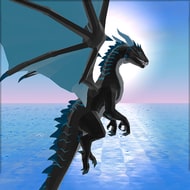
You choose your dragon’s elemental affinity before you ever take flight in Dragon Simulator 3D, and that single early decision, fire, ice, air, or nature, quietly shapes every attack and ability you will use across the rest of the game.
Dragon Simulator 3D opens with naming and customizing your dragon’s appearance, followed by a choice between four elemental affinities. Each affinity unlocks its own set of unique abilities, attacks, and combat styles, meaning a fire-aligned dragon plays with a noticeably different rhythm than an ice, air, or nature-aligned one, even though the underlying flight and exploration systems stay the same across all four.
That control scheme stays consistent regardless of which elemental affinity was chosen, which means the skills feel different in effect, an ice-aligned attack behaves differently than a fire-aligned one, without the actual inputs changing between playthroughs.
Progress in Dragon Simulator 3D is measured through stars earned by completing missions scattered across the level. Once enough stars accumulate, the dragon levels up, becoming both stronger and faster, which directly affects how missions at higher levels feel compared to the same objectives attempted earlier in a playthrough.
Coins collected alongside stars fund a separate track of upgrades focused on speed and strength, meaning a dragon’s overall power comes from two parallel systems working together rather than a single unified currency.
One of the more distinctive milestones in Dragon Simulator 3D arrives at level 4, when players unlock the ability to start a family. This feature sits apart from the combat and mission-completion loop that defines the earlier levels, giving long-term players a different kind of goal once basic strength and speed upgrades are already well underway.
The game’s world is not a single contained arena but a larger 3D space made up of multiple islands, each populated with towns, dragon lairs, wild creatures, and humans. That scale gives Dragon Simulator 3D room for missions to vary meaningfully from one island to the next, rather than repeating the same objective type against a reused backdrop.
Yes. Fire, ice, air, and nature affinities each unlock their own unique abilities, attacks, and combat styles, so the choice made at the start continues to shape how missions and combat feel throughout the playthrough.
Stars earned from completing missions drive the dragon’s level progression, with enough accumulated stars triggering a level-up that makes the dragon both stronger and faster.
Reaching level 4 unlocks the ability to start a family, a distinct milestone separate from the mission and combat progression that defines earlier levels.
Stars and coins in Dragon Simulator 3D drive two related but distinct forms of progress. Stars accumulate toward the next level-up, which increases both speed and strength as a flat improvement, while coins fund direct purchases aimed specifically at speed or strength upgrades outside of the leveling track. That separation means a dragon can be pushed to feel notably faster or stronger between level-ups rather than only growing more capable at fixed milestones, giving players a way to shape their dragon’s feel even while working toward the next star-based level.
The islands that make up Dragon Simulator 3D’s world are not empty flight space; they include towns, wild creatures, and humans scattered across the terrain, which gives missions somewhere to actually happen rather than playing out in a vacuum. That populated world also means combat and exploration can unfold against genuinely different backdrops from one island to the next, rather than repeating the same open sky with a reused ground texture underneath it.
Because dragon lairs are also part of that island layout, players have a recognizable home base to return to between missions, which gives the open world a sense of place beyond simply being a large area to fly through on the way to the next objective.
Dragon Simulator 3D rewards players who commit early to an elemental identity, since every fire breath, tail attack, and later ability builds on the fire, ice, air, or nature choice made before the dragon ever takes its first flight across the game’s island-studded world.
There are no reviews yet. Be the first one to write one.