ADVERTISEMENT
ADVERTISEMENT

 (No Ratings Yet)
 Loading...
Fullscreen
ADVERTISEMENT


 (No Ratings Yet)Loading...
You lean into the microphone, watch the judges’ panel light up on screen, and try to land a voice that is close enough to the character on screen to score points without breaking into laughter halfway through. That tension between commitment and comedy is the entire pitch of The Choicer Voicer, a party game built around doing vocal impressions in front of a small crowd of in-game judges instead of real ones.
| Genre | Party / Vocal Performance |
| Players | 1-4 in the main studio mode |
| Core Input | Microphone |
| Inspiration | The Choicest Voice minigame from a Mario Party title |
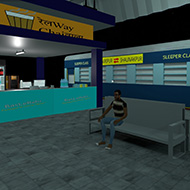
The Choicer Voicer grew directly out of a single minigame that many players only experienced for a few minutes inside a much larger party collection: The Choicest Voice, a vocal-impression segment tucked into one console Mario Party entry. Rather than staying a one-off curiosity, that small idea became the entire foundation for The Choicer Voicer, which takes the “read a line, sound like the character” premise and turns it into a full game built around a studio, a judging panel, and a rotating cast of prompts.
Because the source material was already a performance-under-pressure format, The Choicer Voicer inherits that same rhythm: a line appears, you have a short window to deliver it in the requested voice, and the panel scores your attempt. What changes is scale. Instead of one minigame among dozens, this becomes the whole loop, repeated across a game show studio designed specifically to make each round feel like a segment on a real vocal-talent broadcast.
Players coming in without any memory of the original minigame still find the format easy to follow, since the game leans on universal party-game logic: read the prompt, commit to the bit, get scored. Players who do remember The Choicest Voice tend to notice how much room The Choicer Voicer gives the format to breathe, turning a 90-second aside into a game with its own structure and replay value.
The main mode supports one to four players sharing a single studio, with computer-controlled judges rating each vocal attempt in turn. Because the judges are computer-controlled rather than human, The Choicer Voicer plays just as well solo as it does with a full room, which matters for a game whose core content depends entirely on someone being willing to perform out loud.
What keeps repeat sessions interesting is that the judges, the host, and the studio backdrop are all separately customizable, so two groups playing The Choicer Voicer on the same night can end up looking at completely different show dressing while using the exact same scoring rules underneath.
Alongside the main studio format, The Choicer Voicer includes a Dub Mode built around voicing over existing scenes rather than reading fresh prompts. Where the studio mode is about matching a requested character voice on the fly, Dub Mode shifts the challenge toward performance timing: matching your delivery to footage that is already moving, rather than pacing yourself against a static line of text.
This mode tends to appeal most to players who already enjoy improv-style voiceover as a hobby outside the game, since it borrows the same instinct people use when dubbing clips for friends, just wrapped in The Choicer Voicer’s judging structure.
The Choicer Voicer also builds directly for streamers, with a mode that reads commands typed by Twitch chat and folds them into the session. Instead of the streamer alone deciding what to perform, chat can push suggestions or reactions into the round, which changes The Choicer Voicer from a solo or couch-based game into something closer to a live audience-participation show.
Because this mode depends on chat activity, it plays very differently with a large, active audience than it does with a handful of viewers, and the pacing of the game noticeably shifts to match how quickly chat is willing to participate.
Beyond judges and studio looks, The Choicer Voicer supports content packs: bundles that can include niche jokes, particular quote sets, or custom audio files built around a specific theme. Players can build a pack for their own friend group, referencing shared jokes nobody outside that circle would recognize, and then swap it in for a session that feels tailor-made rather than generic.
Packs can also be shared or downloaded from other players, which means the pool of available menus, judges, hosts, and prompt sets keeps expanding beyond whatever ships in the base experience. A group that gets bored of the default judge panel is never stuck with it; the customization system is built specifically so that boredom has an easy fix.
Go in expecting a party game about commitment more than accuracy. The judges are scoring your willingness to fully lean into a voice, not a precise vocal match, so hesitating halfway through a line tends to score worse than a confident attempt that misses the target voice by a little.
No. Because the judging panel is computer-controlled, a single player can still run full sessions solo, and Dub Mode in particular works well as a one-person activity built around performing over existing footage rather than reacting to other players.
A pack built around your own friend group’s specific jokes and quotes turns generic prompts into personal ones, and since packs cover menus, judges, hosts, and audio all at once, a single custom pack can reshape most of what a session looks and sounds like.
The Choicer Voicer works because it takes something that used to last ninety seconds inside somebody else’s party collection and gives it a studio, a panel, and enough customization that no two groups end up performing the same show twice.
There are no reviews yet. Be the first one to write one.