ADVERTISEMENT
ADVERTISEMENT

 (1 votes, average: 4.00 out of 5)
 Loading...
Fullscreen
ADVERTISEMENT


 (1 votes, average: 4.00 out of 5)Loading...
You pick up the phone, and it is your mother telling you she will be away for work for a few days, which means you, Miko, are now responsible for Jun on your own. That single phone call is the entire inciting incident of Family Secrets 1: Empty Plate, and everything the game does afterward grows out of how ordinary that moment sounds before it stops being ordinary at all.
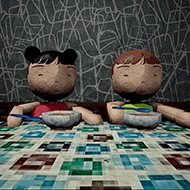
Family Secrets 1: Empty Plate is a first-person horror game centered on two siblings: Miko, who receives the call, and Jun, the younger sibling now left in his care. The horror here is not built around a monster stalking a map; it is built around an ordinary domestic space and the slow realization that being left alone as a child, with dwindling food and no adult around, is frightening on its own terms.
The title itself, Empty Plate, points directly at that theme. Food, care, and responsibility sit at the center of the story rather than at its edges, and the game uses the practical problem of feeding a household to carry most of its emotional weight.
The controls stay deliberately simple, and ESC handles pausing or resuming at any point. That simplicity keeps the focus on atmosphere and story rather than on any combat or puzzle-solving system layered over the top.
Family Secrets 1: Empty Plate spends real time establishing a normal-feeling routine before tipping into anything unsettling, which is a deliberate choice rather than a pacing misstep. Players expecting a fast jump-scare gallery are often thrown by how patient the game is willing to be, leaning on small deteriorations, a bill that should have been paid, a fridge that has less in it each morning, rather than any single dramatic reveal.
Once the story moves into its darker stretches, that patience pays off. The domestic setting keeps the fear grounded in something recognizable rather than fantastical, which is part of why the game gets compared to other titles that use a child’s limited understanding of an adult crisis as their central horror device rather than leaning on outright supernatural threats.
Because Family Secrets 1: Empty Plate is built around exactly two characters, Miko and Jun, the sibling relationship has to do almost all of the emotional work, and it does. Jun’s presence throughout the story raises the stakes of every decision Miko makes, since a single child managing food, safety, and a missing parent for another, younger child is the entire premise the horror is built on top of.
Not primarily. The game leans on slow-building dread tied to neglect and domestic deterioration rather than on a constant chase or frequent jump scares, which sets it apart from faster-paced mascot horror titles built around being actively pursued.
Miko and Jun are the two siblings at the center of the story. Miko receives the call that sets the plot in motion and becomes responsible for looking after Jun once their mother says she will be away for work.
Family Secrets 1: Empty Plate uses WASD for movement, E for interacting with objects and advancing or skipping dialogue, F to toggle the flashlight, and ESC to pause, keeping the control scheme minimal by design.
Family Secrets 1: Empty Plate earns its unease the patient way, turning an ordinary phone call, an empty fridge, and the bond between Miko and Jun into a story that lingers well past the point most horror games would have already shown their monster.
There are no reviews yet. Be the first one to write one.






![Hello Kitty [HORROR]](https://gamesummertimesaga.com/wp-content/uploads/2025/03/hello-kitty-horror.jpg "Hello Kitty [HORROR]")