ADVERTISEMENT
ADVERTISEMENT
 (No Ratings Yet)
 Loading...
Fullscreen
ADVERTISEMENT


 (No Ratings Yet)Loading...
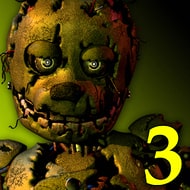
What actually stops Springtrap from reaching your office in Five Nights At Freddys 3, if not locked doors like the earlier games relied on? The answer is a mix of camera-based tracking, ventilation control, and audio misdirection, and understanding that shift is the entire skill ceiling of the game.
| Setting | Fazbear’s Fright horror attraction |
| Main Threat | Springtrap |
| Non-Lethal Threats | Phantom animatronics |
| Core Tools | Camera network, vent control, audio lure |
Five Nights At Freddys 3 strips the cast down dramatically compared to earlier entries. Springtrap, a rabbit-like figure wandering the Fazbear’s Fright attraction, is the only animatronic in the game capable of ending a run outright, and from the second night onward he becomes the primary threat the player has to track and manage across every shift.
Rather than a single unified camera system, Five Nights At Freddys 3 splits monitoring across two separate camera networks, giving players two overlapping ways to keep tabs on where Springtrap currently is. He can begin a given stretch of movement from several different starting cameras, which keeps early tracking from ever feeling fully predictable even for players who have run several nights already.
Beyond the cameras themselves, players have access to audio devices tied into the camera system, and those devices can be used to lure Springtrap away from the office toward wherever the sound is played instead. This turns Five Nights At Freddys 3 into less of a pure hiding game and more of an active misdirection puzzle, since a well-timed audio cue can buy far more breathing room than passive waiting ever would.
Because Springtrap responds to both audio placement and vent access, experienced players tend to treat the two systems together rather than separately, closing off a vent at the same moment they redirect his attention elsewhere to maximize the window it buys them.
Alongside Springtrap, Five Nights At Freddys 3 brings back Freddy Fazbear, Chica, and Foxy from the original game, plus Balloon Boy, Marionette, and Mangle from the second, recast as phantom animatronics. None of these phantoms can actually end a playthrough the way Springtrap can. Instead, encountering one triggers a jump scare and causes one of the office’s systems to fail temporarily, which is disruptive without being directly lethal.
The game frames these phantoms as originating in the player character’s own mind, a byproduct of poor ventilation and the unsettling atmosphere of the Fazbear’s Fright attraction itself, rather than as physically present threats. That framing matters for how players should react to them: panicking over a phantom sighting costs more in lost system time than the phantom itself actually threatens.
Because phantom encounters knock out a system rather than a life, the real danger they create is indirect: losing camera access or audio control at the wrong moment leaves Springtrap unimpeded to close distance without interruption. Players who dismiss phantoms as pure nuisance often get caught off guard later in a night once they realize how much a temporarily disabled system actually cost them in tracking time.
Once Springtrap becomes fully active from the second night forward, the game’s difficulty curve shifts from learning the interface to actually managing it under pressure. Early nights give players room to experiment with camera switching and vent timing without much consequence; later nights punish hesitation far more directly, since Springtrap’s movement does not pause to let a player catch up on a system they let lapse.
No. Springtrap is the only animatronic in Five Nights At Freddys 3 capable of directly ending a playthrough. The phantom animatronics are startling and disruptive to your systems but cannot kill you outright.
He can begin from several different cameras, which keeps his starting position from being fully predictable even across multiple attempts at the same night.
Combining vent control with audio-based luring tends to work better than either tool alone, since closing an adjacent vent while redirecting his attention with sound buys more time than doing just one of the two.
Because encountering one disables one of your systems temporarily, and losing camera or audio access at the wrong moment can let Springtrap close in while you are effectively blind to his movement.
The horror attraction setting of Five Nights At Freddys 3 does real work beyond providing a reason for cameras to exist. Fazbear’s Fright is explicitly built to profit off the reputation of the earlier pizzerias, filled with salvaged parts and props meant to recreate that unsettling atmosphere for paying customers, which puts the player character in the strange position of guarding a haunted-house attraction that is, in some sense, haunted for real. That framing is part of why the phantom animatronics make narrative sense as hallucinations tied to poor ventilation and unsettling surroundings rather than as physically present threats the way Springtrap is.
Long-time players coming from the earlier games in the series tend to notice the biggest mechanical shift immediately: there are no doors to slam shut in a panic here. Five Nights At Freddys 3 replaces that reactive, last-second defense with a proactive one built around cameras, vents, and audio, which changes the entire rhythm of a night. Instead of waiting nervously for something to appear at a doorway, players are constantly checking multiple systems at once, closing vents preemptively and placing audio cues strategically rather than reacting only once a threat is already at the door.
That shift divides opinion in exactly the way any major mechanical change tends to. Some players find the proactive, puzzle-like management of Five Nights At Freddys 3 more engaging than the earlier door-based tension, since success depends on genuinely understanding Springtrap’s movement patterns rather than just reacting fast enough. Others miss the raw, binary panic of slamming a door shut in the earlier games, arguing that a more analytical system trades away some of the series’ signature dread for something closer to a puzzle to be solved.
Visual and audio glitches run throughout Five Nights At Freddys 3, tied closely to the same ventilation and system failures the phantom animatronics trigger. These glitches are not purely cosmetic flourishes; they reinforce the idea that the player character’s own perception cannot be fully trusted during a shift, which keeps the tension elevated even in stretches where Springtrap himself is not currently close to the office.
That unreliable-perception angle is a big part of why phantom encounters land as unsettling even though they cannot end a playthrough directly. A jump scare that turns out to be harmless still costs something, in this case a disabled system, which keeps every phantom sighting feeling consequential rather than like a cheap scare with no real weight behind it.
Five Nights At Freddys 3 replaces the earlier games’ door-slamming panic with something closer to a management puzzle, and the players who last the longest are the ones who treat Springtrap’s cameras, vents, and audio cues as one connected system rather than three separate distractions.
There are no reviews yet. Be the first one to write one.




![Hello Kitty [HORROR]](https://gamesummertimesaga.com/wp-content/uploads/2025/03/hello-kitty-horror.jpg "Hello Kitty [HORROR]")